Skip to content
origamidiagrams

Blintz fold

A blintz fold is the move of folding all four corners of a square in to its center point, producing a smaller square rotated 45 degrees.

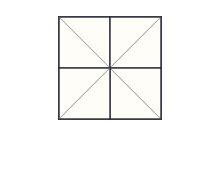
Crease both diagonals first so the center is clearly marked. Then fold each corner in turn so its tip lands exactly on the center where the creases cross, and press flat. The name comes from the way a blintz pancake is folded around its filling, and the move is a common opening for boxes and many traditional models.

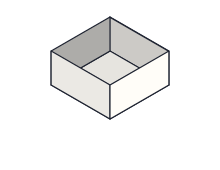
Gaps or overlaps at the center are the typical problem, and they grow into crooked walls or uneven edges later. Align each tip with the crossing of the diagonals before creasing, and check the four new edges form a neat square. The Masu Box starts with a blintz fold.

How to fold a blintz fold, step by step

  1. 1

    Fold the square in half along both diagonals, unfolding after each, so the center is marked by an X.

  2. 2

    Fold one corner in so its tip lands exactly where the creases cross.

  3. 3

    Repeat with the opposite corner, then with the remaining two.

  4. 4

    Check that the four tips meet at the center without gaps or overlaps.

  5. 5

    Press the new edges flat; you now have a smaller square turned 45 degrees.
Advertisement

Common mistakes and how to fix them

  • Gaps or overlaps at the center

    Align each tip with the crossing of the diagonals before creasing. Errors here turn into crooked walls in a box.

  • The smaller square isn’t square

    Each new edge should run between the midpoints of two neighboring sides. If one edge is skewed, refold that corner.

  • The paper bulges after a second blintz

    A second blintz folds through many layers at once. Press firmly with a fingernail, and use thin paper for models that need it.

When you’ll use it

The blintz fold is one of the most useful opening moves in origami because it tucks the four corners into the middle, where they can be pulled out again later as extra points or as a change of color. Boxes rely on it because the folded-in corners become the inside of the walls, as in the Masu Box. Some traditional models blintz the square before making a base, which gives a smaller base with extra flaps hidden inside it. The Fortune Teller shows another side of the move: blintzing on both sides of the paper creates the four pockets your fingers go into. Because errors add up quickly, crease the diagonals sharply first and line up each tip carefully.

Practice it on these models

Blintz fold: questions

Why is it called a blintz fold?+

The corners fold over the middle the way a blintz pancake is folded around its filling.

Which models use a blintz fold?+

The Masu Box starts with one, and the Fortune Teller uses two, one on each side of the paper.

What is a blintzed base?+

A base folded from a square that was blintzed first, such as a blintzed bird base. Because the corners are already tucked into the middle, the finished base has extra hidden flaps that can be pulled out for more legs, wings or color changes.