How to Fold an Origami Samurai Helmet
The origami samurai helmet, or kabuto, is a traditional Japanese model with two horns and a brim, folded from one square. It is easy, takes about four minutes, and can be made large enough to wear by using a big newspaper square.
- Difficulty
- Easy
- Time
- About 4 min
- Steps
- 7
- Paper
- Any square; a newspaper square about 50 cm (20 in) wide makes a helmet that fits a child
Turn the square into a diamond, white side up, and bring its upper corner down onto the lower one.
Tip: swipe the diagram, or use ← → on your keyboard. Space plays and pauses.
All steps
Advertisement
Step-by-step instructions
The same 7 steps as the animation above, written out so you can fold away from the screen.
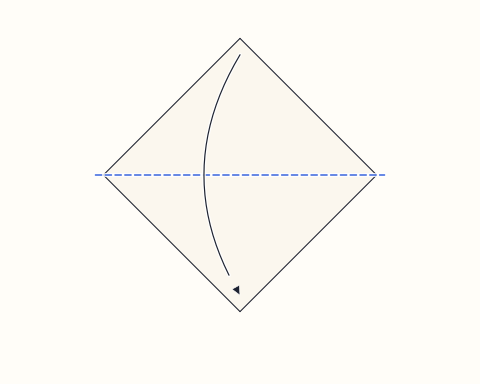
Step 1
Turn the square into a diamond, white side up, and bring its upper corner down onto the lower one.
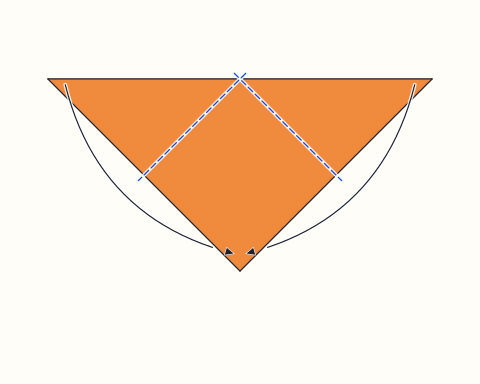
Step 2
Carry the side corners down to the bottom tip; the result is a smaller diamond.
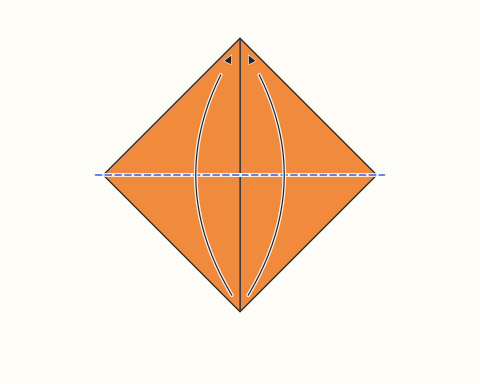
Step 3
Take the lower tips of both front flaps up to the top of the diamond.
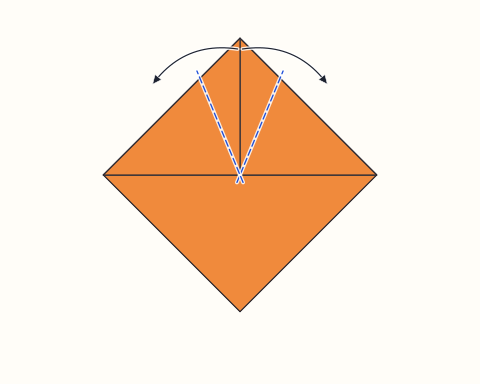
Step 4
Angle the tips of these two flaps outward, folding from the midpoint of the lower edge, so they splay like horns.
Advertisement
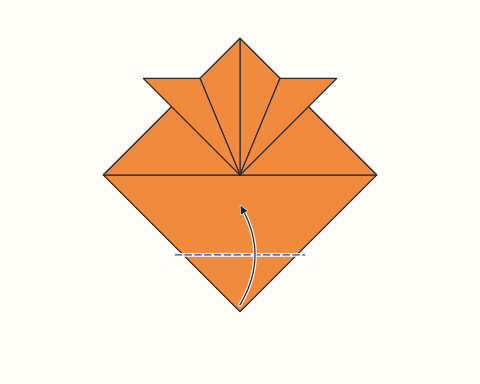
Step 5
Raise the front layer of the lower point so its tip ends a little above the base of the horns.
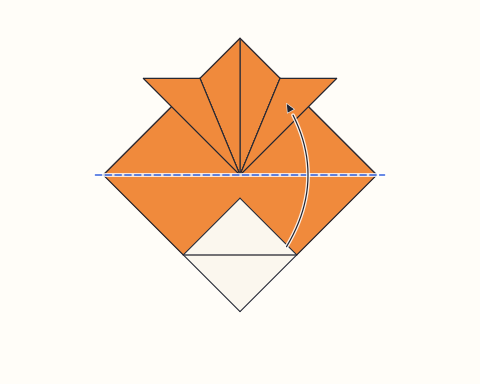
Step 6
Fold that layer up once more along the lower edge of the horns to form the brim.
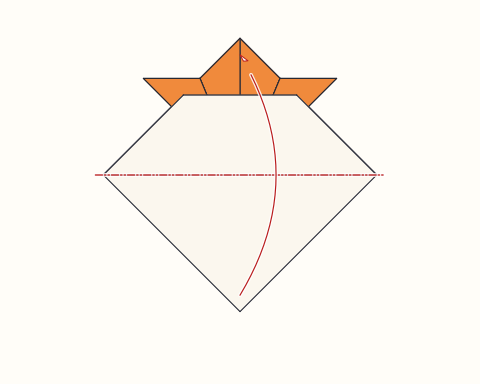
Step 7
Take the last layer at the bottom and fold it up behind the helmet, or tuck it inside if you prefer.
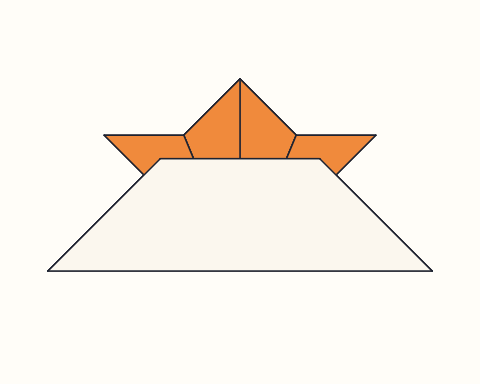
Finished
Spread the bottom edge slightly and the kabuto is complete. Folded from a big newspaper square, it is large enough to wear.
About the origami samurai helmet
The kabuto is a traditional Japanese model representing a samurai helmet, complete with two horn-like crests and a folded brim. It is especially associated with Children’s Day on May 5, when families in Japan display miniature armor and helmets as a wish for their children’s health and strength. Many children in Japan learn to fold a newspaper kabuto large enough to wear, and the model is just as popular with children elsewhere. Small versions folded from patterned paper also make neat decorations for cards or a shelf.
The sequence begins with a triangle and a smaller diamond, then shows how separating layers creates different parts of the same model. The horns, the brim and the back are all built from separate layers of a single point, folded one after another. It is an excellent illustration of how one area of paper can be worked in stages to produce detail, and it rewards symmetry more than strict precision. If the two horns match and the brim is level, the helmet looks crisp even when the folds are not perfect to the millimeter.
To make a helmet that fits, cut a large newspaper spread into a square before you begin; around 50 cm suits most children. After the helmet, try the Paper Boat, which also passes through a wearable hat on its way to becoming a boat. The Fox Face and Dog Face start from the same folded triangle and add animal features instead of horns. For another traditional Japanese model with a bit more challenge, move on to the Masu Box and, once you feel ready, the Paper Crane.
Origami samurai helmet: questions
What is a kabuto?+
Kabuto is the Japanese word for a samurai helmet. The origami version is a simplified traditional design with horns, echoing the decorative crests on real helmets.
Why is the samurai helmet folded on Children’s Day?+
In Japan, Children’s Day (Kodomo no Hi) on May 5 is traditionally associated with wishes for boys’ health and strength. Families display samurai helmets and armor, and children often fold paper kabuto from newspaper to wear.
How big should the paper be to wear the helmet?+
A square about 50 cm (20 in) across fits most children. Adults need something closer to 60–70 cm, which you can get from a full newspaper spread.
Is the samurai helmet hard to fold?+
No, it is a beginner model with only valley and mountain folds. The only step needing care is folding the horns at matching angles.
Fold this next
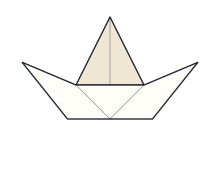
Paper Boat
The origami paper boat is a classic folded from a rectangular sheet, passing through a paper hat on the way to a small boat that really floats. It is an easy model that most children and adults finish in about five minutes.
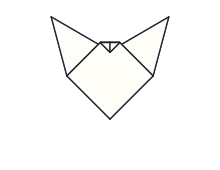
Fox Face
The origami fox face is a pointed fox head with tall ears, folded from one square in five steps and finished with drawn eyes and a nose. It is an easy model that takes about three minutes.
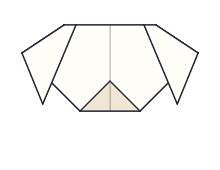
Dog Face
The origami dog face is a simple puppy head with floppy ears folded from one square, and children often draw on eyes and a nose to finish it. It is very easy and takes about three minutes, making it ideal for first-time folders.
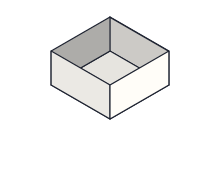
Masu Box
The masu box is a traditional Japanese square box folded from a single sheet that locks together without glue. It is an intermediate model that takes about eight minutes, with one three-dimensional step where the walls are raised.