How to Fold an Origami Fish
The origami fish is a simple flat fish with a blunt nose and an upturned tail, folded from a kite shape made from one square. It is easy and takes about four minutes, so it suits children and complete beginners.
- Difficulty
- Easy
- Time
- About 4 min
- Steps
- 5
- Paper
- A 15 cm (6 in) square in any color
White side up in a diamond, fold top to bottom, crease, and open.
Tip: swipe the diagram, or use ← → on your keyboard. Space plays and pauses.
All steps
Step-by-step instructions
The same 5 steps as the animation above, written out so you can fold away from the screen.
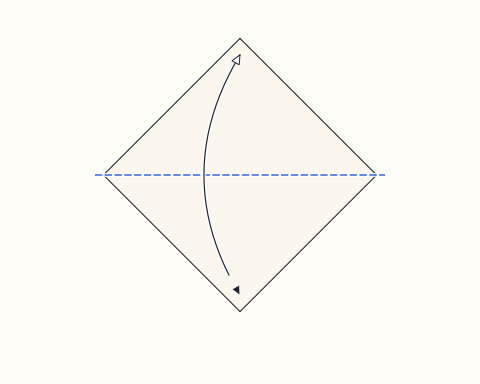
Step 1
White side up in a diamond, fold top to bottom, crease, and open.
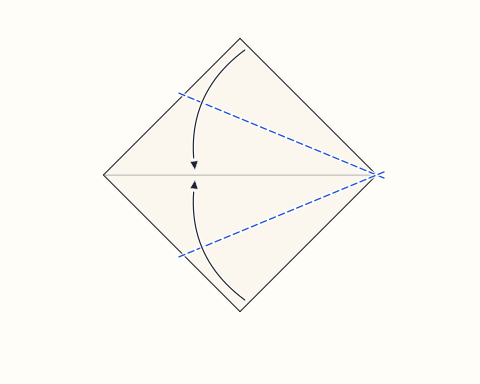
Step 2
Fold both right-hand edges to the center line so they meet, forming a kite that points right.
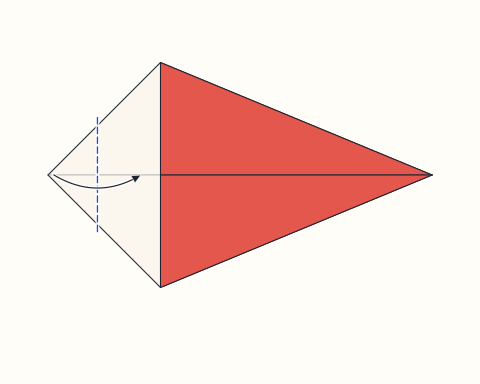
Step 3
Fold the left corner in slightly to blunt the nose.
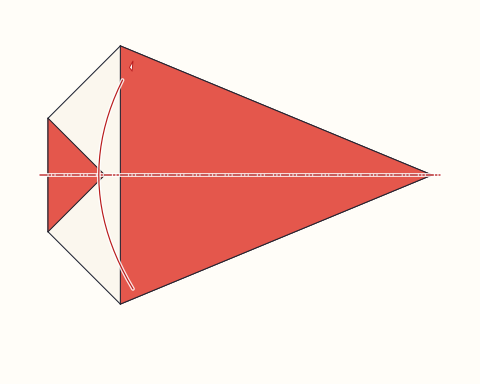
Step 4
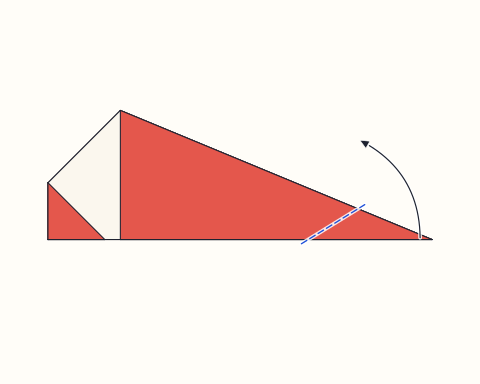
Mountain fold the model in half along its horizontal middle, sending the lower half behind.
Step 5
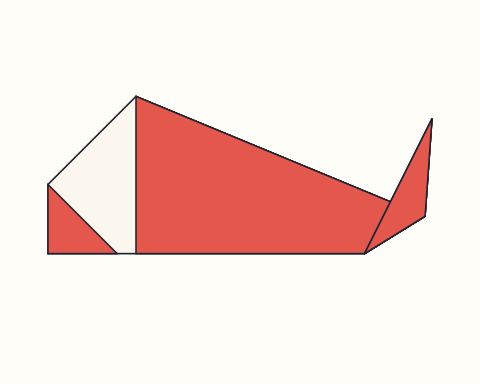
Fold the narrow tail upward at an angle through all layers so the tail flicks up.
Finished
Draw an eye close to the nose. Glue several fish in assorted colors onto blue card for an aquarium scene.
About the origami fish
The fish is a simple traditional model that turns a kite shape into a streamlined swimmer with a blunt nose and a flicked-up tail. It is flat, quick to fold and easy to decorate, which makes it a popular classroom project for ocean themes, under-the-sea displays and story time. Children often fold a whole school of fish in different colors and glue them onto blue card, adding bubbles, seaweed and waves with markers. Metallic papers turn the same model into shiny ornaments for a mobile above a bed or desk.
The sequence introduces the kite, one of the most basic shapes in origami, and shows how folding the model in half creates a side view with a clear top and bottom. The blunt nose teaches that tiny folds can change a silhouette, and the final tail fold goes through all the layers at an angle, a first taste of the kind of shaping used on more complex animals. Because the tail angle is up to you, each fish can look as if it is swimming, turning or leaping, which encourages children to experiment.
Once the fish feels easy, fold it in a few sizes and arrange them as if they were swimming together in a shoal. Group it with the Dog Face and Fox Face for a set of simple animals, or explore the Tulip Stem, which begins from a very similar kite before becoming a stalk and leaf. The Jumping Frog is a good next step for children who want a model that moves, and the Paper Boat can give your paper fish something to swim beside.
Origami fish: questions
Is the origami fish good for young children?+
Yes. It has five simple folds and a playful result. Children around five and up can usually fold it with little help.
What is a kite shape in origami?+
A kite is formed by folding two adjacent edges of a square to a diagonal crease. It is one of the simplest origami shapes and the starting point for many beginner animals.
How can I make a fish mobile?+
Fold several fish, punch a small hole near the top of each, and hang them from a coat hanger or stick with thread at different lengths.
Why does my tail fold look bulky?+
The tail is thick because it goes through several layers. Press firmly with a fingernail, or use thinner paper.
Fold this next
Dog Face
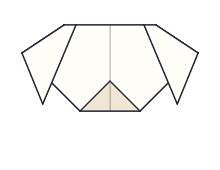
The origami dog face is a simple puppy head with floppy ears folded from one square, and children often draw on eyes and a nose to finish it. It is very easy and takes about three minutes, making it ideal for first-time folders.
Fox Face
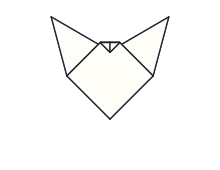
The origami fox face is a pointed fox head with tall ears, folded from one square in five steps and finished with drawn eyes and a nose. It is an easy model that takes about three minutes.
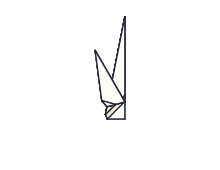
Tulip Stem
The origami tulip stem is a slim green stalk with an attached leaf, folded from one square to support the origami tulip bloom. It is easy, takes about three minutes, and uses a series of narrowing folds to the center line.
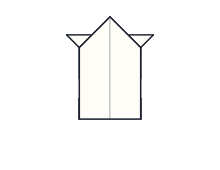
Jumping Frog
The origami jumping frog is a traditional action model folded from a stiff rectangle that springs forward when you press and release its back. It is an intermediate model that takes about six minutes, mostly for the collapse and the zigzag spring.