How to Fold an Origami Jumping Frog
The origami jumping frog is a traditional action model folded from a stiff rectangle that springs forward when you press and release its back. It is an intermediate model that takes about six minutes, mostly for the collapse and the zigzag spring.
- Difficulty
- Intermediate
- Time
- About 6 min
- Steps
- 9
- Paper
- An index card measuring 3 by 5 inches, or stiff paper trimmed to 7.5 by 12.5 cm
Use stiff paper cut to 7.5 × 12.5 cm, or a 3 × 5 inch index card, white side up. Crease an X across its upper end: take the upper right corner over to the opposite long edge, unfold, then do the mirror fold with the upper left corner.
Tip: swipe the diagram, or use ← → on your keyboard. Space plays and pauses.
All steps
Step-by-step instructions
The same 9 steps as the animation above, written out so you can fold away from the screen.
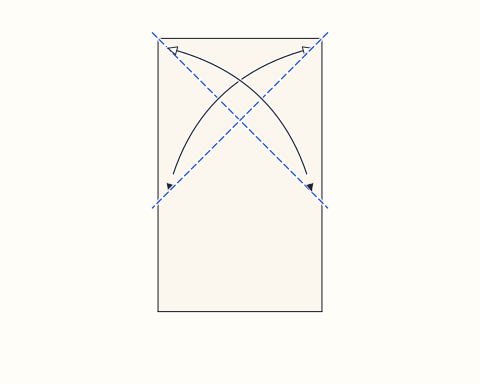
Step 1
Use stiff paper cut to 7.5 × 12.5 cm, or a 3 × 5 inch index card, white side up. Crease an X across its upper end: take the upper right corner over to the opposite long edge, unfold, then do the mirror fold with the upper left corner.
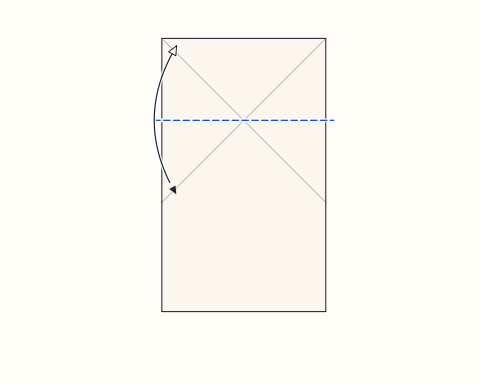
Step 2
Fold the upper edge down so the crease passes through the middle of the X, then open it.
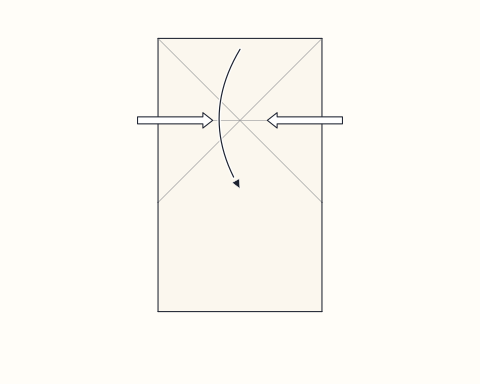
Step 3
Press the two ends of that horizontal crease inward while the upper edge drops down; the square at the top folds itself into a triangle resting on the card.
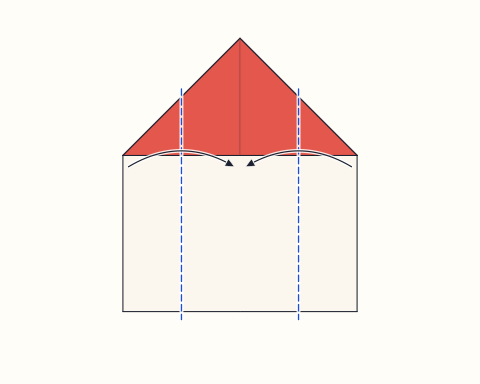
Step 4
Bring the long sides of the card in to meet at the middle, sliding their top ends beneath the triangle’s flaps.
Step 5
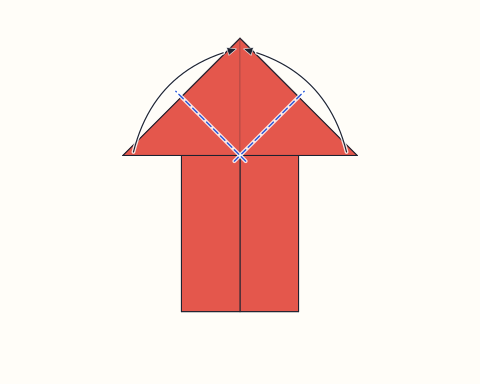
Take the lower corners of the two triangle flaps up to the apex; these form the front legs.
Step 6
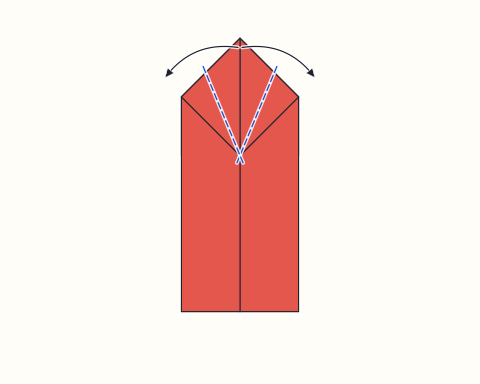
Angle the points of both flaps outward to shape the front legs.
Step 7
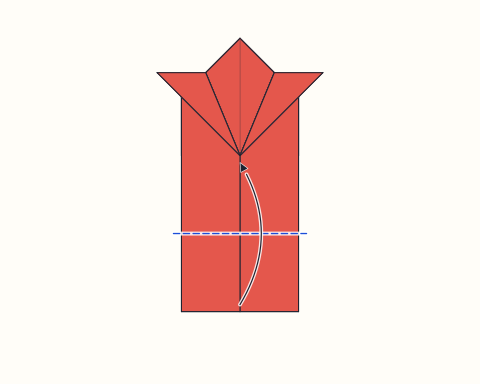
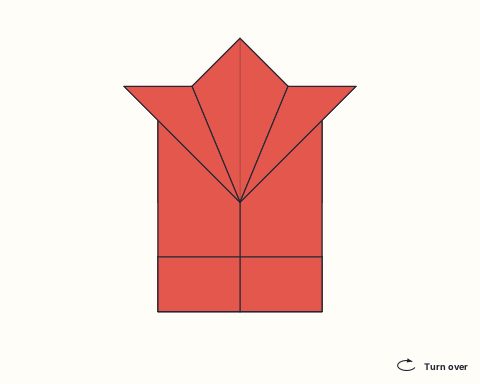
Lift the lower edge until it touches the base of the triangle.
Step 8
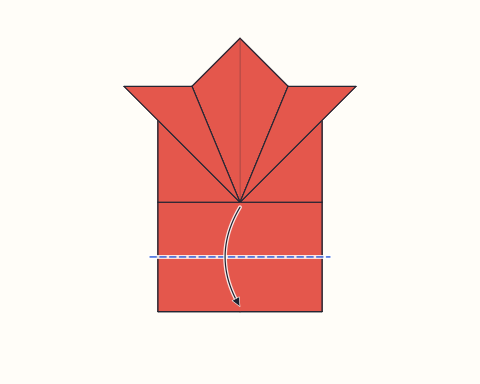
Now fold this flap back down, halving it. This zigzag acts as the spring that sends the frog jumping.
Step 9
Flip the model over.
Finished
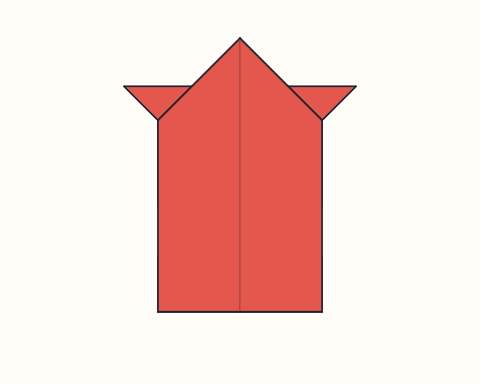
Your frog is ready to hop. Push down on its rear edge with a fingertip and let your finger slip off, and it will spring forward. Firmer card gives bigger leaps, and you can add some eyes if you want.
About the origami jumping frog
The jumping frog is a traditional action model and one of the most entertaining things to fold for children and adults alike. Made from an index card, it has front legs, a solid body and a pleated back that works as a spring. Press down on the back edge, slide your finger off, and it hops across the table, sometimes flipping in the air. Kids often fold a whole pond of frogs and hold races, and the model is a regular at classroom parties because it turns a spare card into a toy in minutes.
The sequence combines a collapse with a pleat. The top square of the card is creased into an X and collapsed into a triangle, a form of the waterbomb base, which later provides the front legs. At the other end, a simple zigzag fold becomes the spring. This teaches how paper stores energy and how stiffness changes the way a model behaves, which is why the same frog from printer paper barely moves while one from card jumps well. It is a hands-on way to talk about springs, force and friction with young folders.
Once your frog hops reliably, try adjusting it: a deeper pleat makes a stronger spring, and trimming the card slightly changes the balance. If you want another model that moves, the Pinwheel spins in the wind and makes a good pair for an outdoor afternoon. The Butterfly practices the same collapse on a square, so it is useful if step 3 gave you trouble. For quick animals before or after, the Fish is a gentle option, and the Paper Boat is another playable classic that children can take outside.
Origami jumping frog: questions
Why doesn’t my origami frog jump?+
The spring is usually too soft or not creased sharply. Use an index card or stiff paper, crease the final pleat hard, and press at the back edge before sliding your finger off. A frog folded from thin paper tends to slide rather than hop.
Can I fold the jumping frog from a square?+
There are square versions, but this diagram uses a 3:5 rectangle, which gives a longer body and a stronger spring. You can trim printer paper to roughly 7.5 × 12.5 cm if you do not have index cards.
How far can an origami frog jump?+
A well-folded index-card frog typically hops several centimeters forward and sometimes flips. Jump distance depends on paper stiffness and how cleanly you release your finger.
Is this a good origami project for a classroom?+
Yes, it is a classroom favorite because it ends with a working toy. Children can hold jumping contests, measure distances, and experiment with different papers, which turns it into a simple physics lesson.
Fold this next
Pinwheel
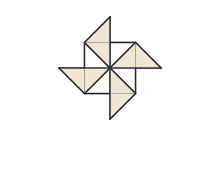
The origami pinwheel is a flat four-bladed model folded from the traditional windmill base that can be pinned to a stick so it spins in the wind. It is an intermediate model taking about six minutes, with one careful step where hidden corners are pulled out.
Butterfly
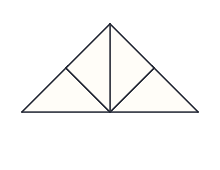
The origami butterfly is a small model with four wings and a locked body, folded from a square using the waterbomb base. It is a comfortable intermediate model that takes about six minutes and introduces collapsing a base.
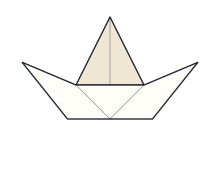
Paper Boat
The origami paper boat is a classic folded from a rectangular sheet, passing through a paper hat on the way to a small boat that really floats. It is an easy model that most children and adults finish in about five minutes.
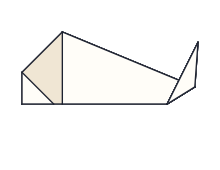
Fish
The origami fish is a simple flat fish with a blunt nose and an upturned tail, folded from a kite shape made from one square. It is easy and takes about four minutes, so it suits children and complete beginners.