Skip to content
origamidiagrams

Pleat

A pleat is a pair of neighboring folds, one valley and one mountain, that creates a zigzag step in the paper.

Make a valley fold along the first line, then fold part of that flap back the other way along a second line parallel to it. Viewed from the side, the paper forms a Z shape, like one section of a folded fan. Pleats are used to shorten a flap, create stripes of alternating color, or, as in the Jumping Frog, build a springy section that stores energy.

Keep both folds exactly parallel; if they drift apart at one end, the pleat twists and the model sits crooked. Crease each fold separately and firmly before pressing the pleat flat. In the frog, a limp pleat is the most common reason the model fails to jump.

How to fold a pleat, step by step

  1. 1

    Make a valley fold along the first line of the pleat and crease it sharply.

  2. 2

    Fold part of that flap back the other way along a second line parallel to the first. Seen from the front, this second fold is a mountain fold.

  3. 3

    Check that both folds stay parallel along their whole length.

  4. 4

    Press the pleat flat; seen from the side, the paper should form a Z.

  5. 5

    For a series of pleats, as in a paper fan, repeat the pair of folds at equal distances.
Advertisement

Common mistakes and how to fix them

  • The pleat twists and the model sits crooked

    The two folds are not parallel. Line them up with edges or creases rather than by eye, and crease each fold separately before flattening.

  • The Jumping Frog won’t jump

    Its pleat is the spring. Crease both folds firmly so the zigzag snaps back when pressed, as shown in the Jumping Frog diagram.

  • The step is too wide or too narrow

    The distance between the two lines sets the size of the step. Follow the reference points in the diagram rather than guessing.

When you’ll use it

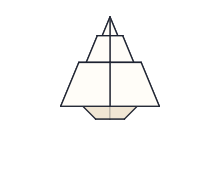
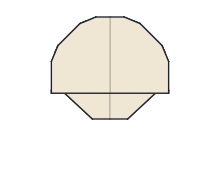
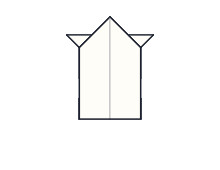
Pleats change length and color. A pleat across a flap shortens it, and several in a row make stripes of alternating color, as in a paper fan. In models they create steps and edges: the tiers of the Christmas Tree, the line of the jaw in the Skull, or the spring of the Jumping Frog. Pleats are also the basis of more advanced techniques. A crimp is a pleat made through the layers of a point, and an origami tessellation is a whole sheet of pleats that twist around one another. Keeping the two folds parallel is the skill that carries over to all of them.

Practice it on these models

Pleat: questions

What is the difference between a pleat and a crimp?+

A pleat is made on flat layers of paper. A crimp is a pleat made through the layers of a point with reverse folds, so the point changes direction.

Which models use pleats?+

The Jumping Frog uses one as its spring, the Christmas Tree uses two to make its tiers, and the Skull uses one to set its jaw.

How is a pleat shown in diagrams?+

As a valley line and a mountain line drawn side by side, often with a zigzag arrow showing the paper folding back on itself.