Skip to content
origamidiagrams

Waterbomb base

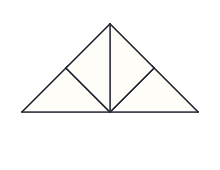
The waterbomb base is a traditional starting shape in which a square collapses into a triangle with two flaps on each side.

Crease both diagonals, turn the paper over, and crease both midlines. Then push the left and right edges inward along the horizontal midline while bringing the top half down; the paper folds itself into a triangle with its point at the top. It takes its name from the traditional inflatable waterbomb, or paper balloon, that is folded from it.

It is the inside-out twin of the preliminary base, so the usual mistake is placing the diagonal and midline creases on the wrong sides. If you get a square instead of a triangle, reverse which set of creases you made first. On this site it forms the Butterfly’s wings and the Jumping Frog’s front legs.

How to fold a waterbomb base, step by step

  1. 1

    With the white side up, fold the square in half along both diagonals, unfolding after each.

  2. 2

    Turn the paper over.

  3. 3

    Fold it in half edge to edge both ways, unfolding after each fold.

  4. 4

    Hold the left and right edges and push them toward the middle along the horizontal crease.

  5. 5

    At the same time, bring the top half down; the paper collapses along the creases.

  6. 6

    Flatten it into a triangle with its point at the top and two flaps on each side.
Advertisement

Common mistakes and how to fix them

  • You get a square instead of a triangle

    The creases are bending the other way, so you have made a preliminary base. Turn the paper over and collapse it again from that side.

  • The flaps are uneven

    Check that the creases cross exactly at the center of the sheet before collapsing.

  • The center tears during the collapse

    Every layer meets at the center point. Collapse slowly, and avoid very thick paper.

When you’ll use it

The waterbomb base is the preliminary base's twin: the same creases, bent the opposite way. Besides the traditional waterbomb, it is the start of the popular inflatable tulip blossom and of many simple animals and insects. On this site it opens the Butterfly, the Bat and the Water Balloon. Once you can fold both bases, try switching between them: open a waterbomb base slightly, push its center the other way, and it collapses into a preliminary base. That small experiment shows how much of origami depends on the direction of creases rather than on their position, and it makes collapses in harder models far less mysterious.

Practice it on these models

Waterbomb base: questions

Why is it called the waterbomb base?+

It is the base of the traditional waterbomb, or paper balloon, which is inflated by blowing into a small hole. You can fold one with our Water Balloon diagram.

Which models start from a waterbomb base?+

On this site the Butterfly, the Bat and the Water Balloon start from one, and the Jumping Frog uses the same collapse at the top of an index card.

Is the waterbomb base hard to fold?+

No. It needs only four creases and one collapse, so it is a good first base for beginners and children. If the collapse feels stiff, sharpen the creases first and push the two sides in together rather than one after the other.