How to Fold an Origami Whale
The origami whale is a flat whale with a large rounded head, a straight back and a tail that rises behind it, folded from a kite shape made from one square. It is an easy model of six steps that takes about four minutes, which makes it a good choice for children and beginners.
Quick answerThe origami whale is an easy model folded in 6 steps and about 4 minutes, using only valley and mountain folds. You need a 15 cm (6 in) square in blue or grey.
- Difficulty
- Easy
- Time
- About 4 min
- Steps
- 6
- Paper
- A 15 cm (6 in) square in blue or grey
Turn the square so it sits as a diamond with the white side up, fold the top corner down to the bottom corner, and unfold to leave a horizontal crease.
Tip: swipe the diagram, or use ← → on your keyboard. Space plays and pauses.
All steps
Advertisement
Step-by-step instructions
The same 6 steps as the animation above, written out so you can fold away from the screen.
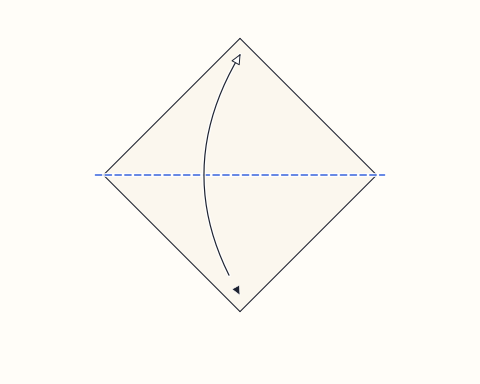
Step 1
Turn the square so it sits as a diamond with the white side up, fold the top corner down to the bottom corner, and unfold to leave a horizontal crease.
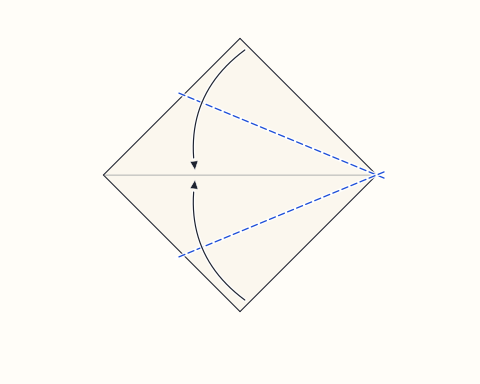
Step 2
Bring both right-hand edges in so they lie along the horizontal crease, forming a kite whose point faces right.
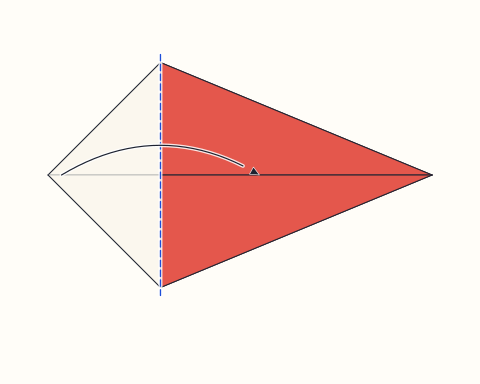
Step 3
Fold the white left corner across to the right, creasing along the line where the edges of the two kite flaps finish. This gives the whale its big, blunt head.
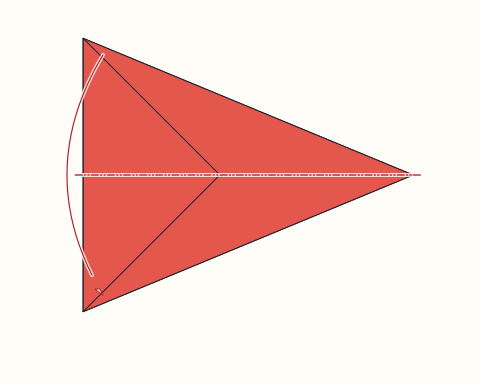
Step 4
Mountain fold the model in half along the horizontal crease, sending the top half behind, so the straight folded edge becomes the whale's back.
Advertisement
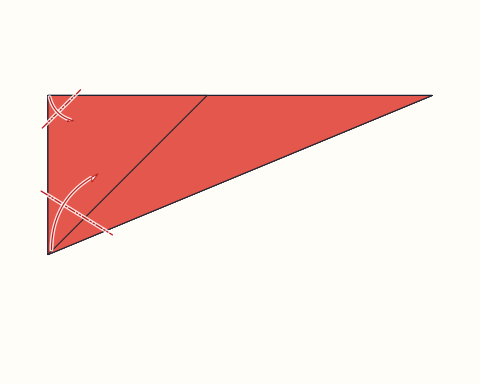
Step 5
Mountain fold the two front corners of the head behind by a small amount to round off the forehead and the jaw.
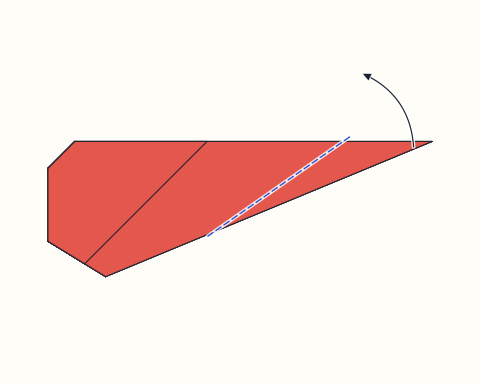
Step 6
Fold the narrow tail end upward at an angle through all the layers, so the tail stands up high behind the body.
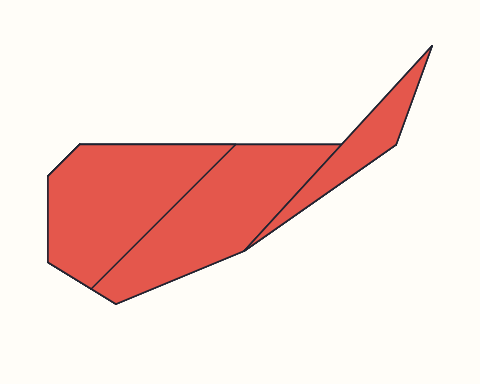
Finished
Draw an eye near the front of the head and a curved mouth line if you like. Your whale is ready to swim across a card, a window or an ocean-themed wall display.
About the origami whale
The kite-based whale is one of the classic first animals in origami. Traditional versions differ in their details, but they share the same idea: the wide end of a kite becomes a big head, the narrow point becomes the tail, and folding the kite in half turns it into a side view with a strong, simple silhouette. The result is instantly recognisable as a whale, even though it is made with only a handful of folds and no cuts, and it is often one of the models children remember and fold again long after a lesson.
The sequence builds on the kite, one of the most basic origami shapes, and shows how the same starting point can lead to different animals. Folding the white corner over hides the uncoloured paper and locks the kite flaps in place, a small example of how a single fold can do two jobs. The rounding folds introduce the idea of shaping with small mountain folds, and the final tail fold, made through every layer, teaches firm, confident creasing. Because the head size and tail angle are easy to vary, each whale can have its own personality.
Whales work well in ocean displays, as cards for a friend who loves the sea, or strung on thread as a mobile. Fold a pod in several shades of blue, add a Fish or two, and set a Penguin on an ice floe nearby. The Fish shares the whale's kite start and makes an interesting comparison, while the Swan begins from a kite that is narrowed twice before it gains its long neck. For a model that floats on real water, try the Paper Boat next.
Origami whale: questions
Is the origami whale easy enough for kids?+
Yes. It uses only valley and mountain folds, and each one lines up with a crease, an edge or a corner. Children from about five or six can usually fold it with a little help on the tail.
What is the difference between the origami whale and the fish?+
Both start from the same kite. The fish folds only a small tip in for its nose and keeps a flat belly, while the whale folds the whole wide end over to make a large head, has its straight fold along the top as a back, and raises its tail much higher.
What paper is best for an origami whale?+
Paper coloured on one side works best, because every visible surface of the finished whale shows the coloured side. Blue and grey are natural choices, and a black square makes a convincing orca if you draw on white patches.
Why is my whale's tail thick and hard to fold?+
The tail fold goes through all the layers at the narrow end. Press it with a fingernail or a bone folder, or use thinner origami paper rather than printer paper.
Fold this next
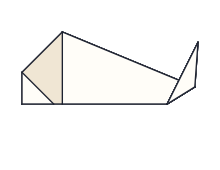
Fish
The origami fish is a simple flat fish with a blunt nose and an upturned tail, folded from a kite shape made from one square. It is easy and takes about four minutes, so it suits children and complete beginners.
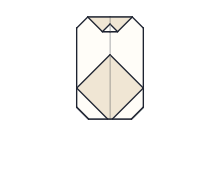
Penguin
The origami penguin is a flat penguin seen from the front, with a dark back and wings, a white belly, a white face and a small dark beak, folded from one square that is dark on one side and white on the other. It is an easy model of six steps that takes about three minutes, using only valley and mountain folds.
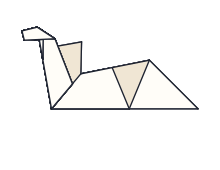
Swan
The origami swan is the traditional simple swan with a raised neck and a head that points forward, folded from a kite shape made from one square. It is an easy model that takes about five minutes; the only moves that need care are the two outside reverse folds at the end.
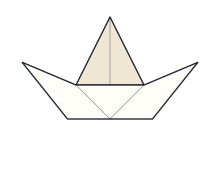
Paper Boat
The origami paper boat is a classic folded from a rectangular sheet, passing through a paper hat on the way to a small boat that really floats. It is an easy model that most children and adults finish in about five minutes.