How to Fold an Origami Water Balloon
The origami water balloon, also called the waterbomb, is a traditional model that you fold flat and then inflate by blowing into a small hole, turning it into a hollow paper cube. It is a beginner-to-intermediate model that takes about eight minutes, mostly for the waterbomb base and the tucks.
Quick answerThe origami water balloon is an intermediate model folded in 13 steps and about 8 minutes, using the crease and waterbomb base. You need a 15–20 cm (6–8 in) square of thin, crisp paper; origami paper or thin printer paper.
- Difficulty
- Intermediate
- Time
- About 8 min
- Steps
- 13
- Paper
- A 15–20 cm (6–8 in) square of thin, crisp paper; origami paper or thin printer paper
Start with the white side facing you. Fold the square in half corner to corner along one diagonal, open it, and repeat along the other diagonal.
Tip: swipe the diagram, or use ← → on your keyboard. Space plays and pauses.
All steps
Advertisement
Step-by-step instructions
The same 13 steps as the animation above, written out so you can fold away from the screen.
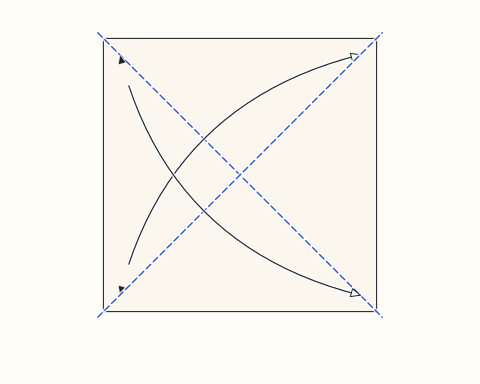
Step 1
Start with the white side facing you. Fold the square in half corner to corner along one diagonal, open it, and repeat along the other diagonal.
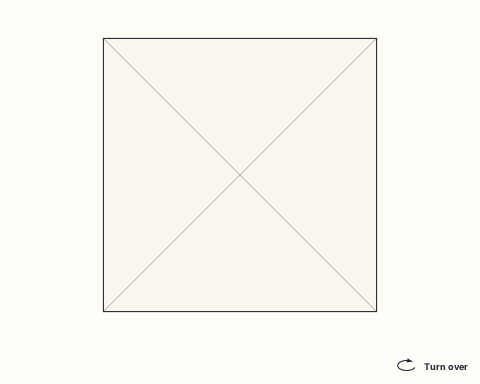
Step 2
Turn the paper over.
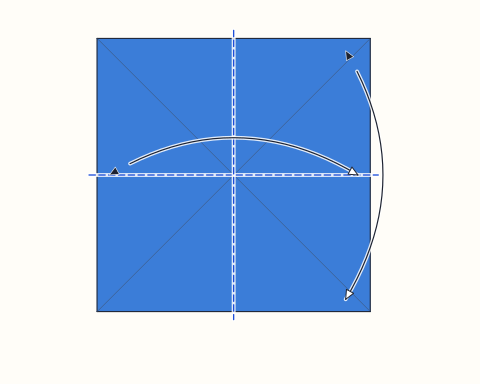
Step 3
Fold it in half edge to edge in both directions, opening it after each fold, so you have creases along both midlines.
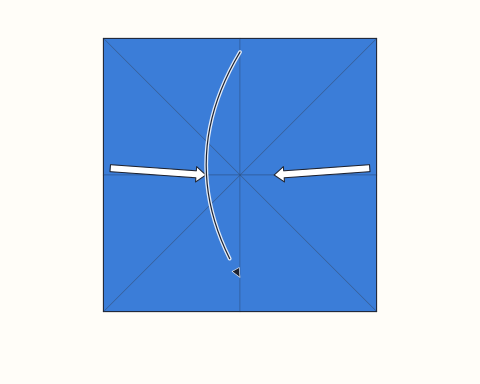
Step 4
Push the left and right edges inward along the creases while you bring the top half down. The paper collapses into a triangle with its point at the top: the waterbomb base.
Advertisement
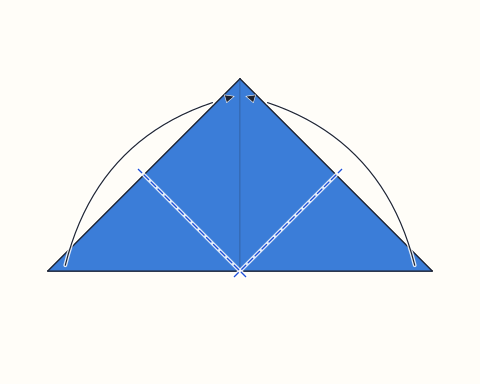
Step 5
Fold the bottom corners of the two front flaps up to meet the top point.
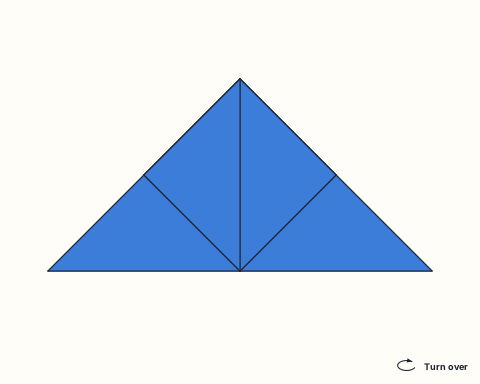
Step 6
Turn the model over.
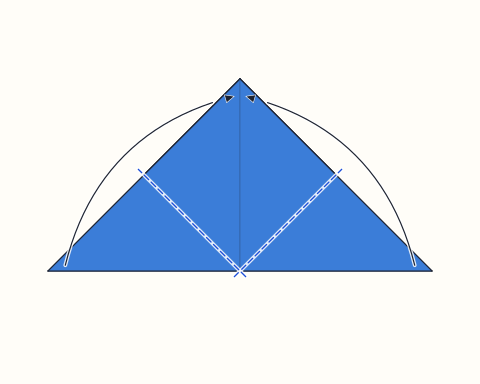
Step 7
Fold the bottom corners on this side up to the top point as well. The model is now a small diamond.
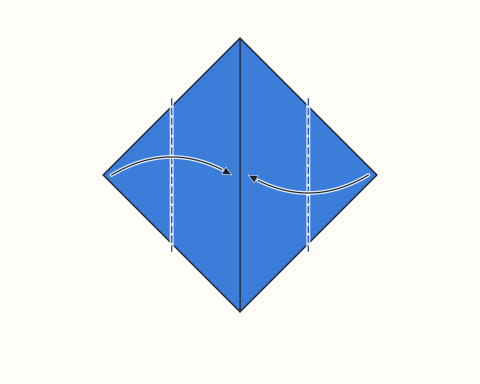
Step 8
Fold the left and right corners of the front layers in so they meet on the vertical center line.
Step 9
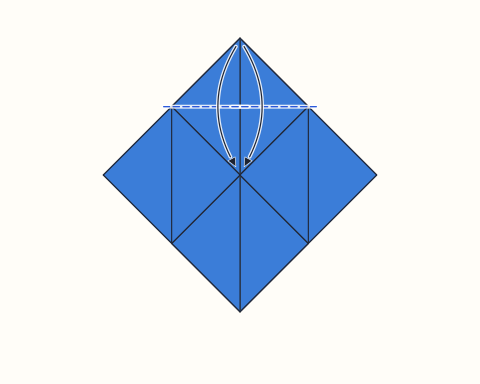
Fold the two loose points at the top down so their tips meet in the center of the model.
Step 10
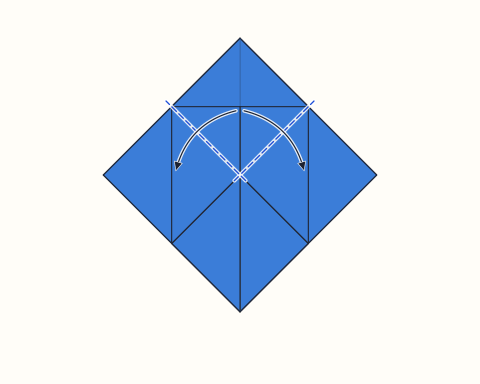
Fold each of those small triangles again, along the top edge of the side triangle beneath it, and slide it into the pocket of that side triangle.
Step 11
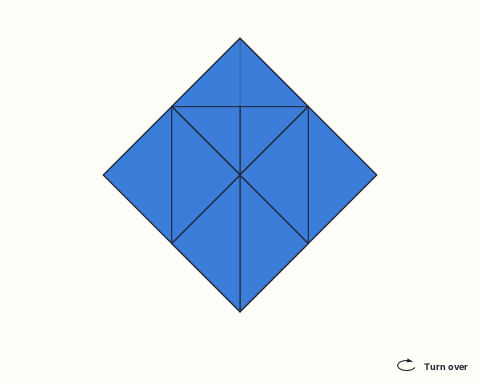
Turn the model over.
Step 12
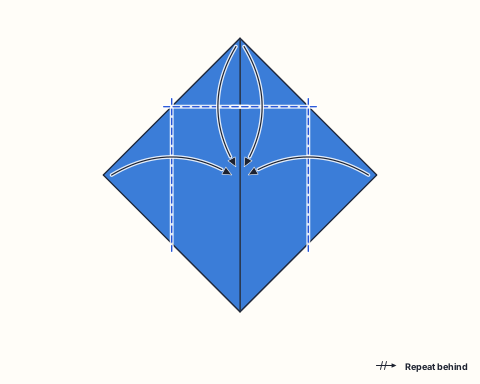
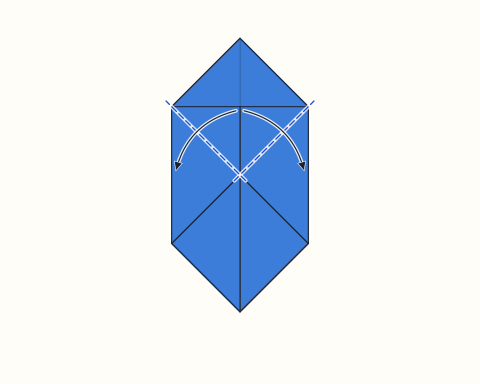
Repeat the same sequence on this side: fold the side corners in to the center line, then fold the two top points down to the center.
Step 13
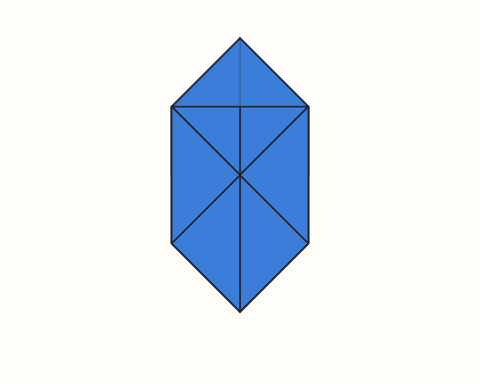
Fold the two new small triangles and tuck them into their pockets, so both sides match. The flat waterbomb is finished.
Finished
Hold the model lightly and blow firmly into the small hole at the bottom point. The paper puffs out into a cube; gently pull the loose points apart and shape the edges with your fingers. Fill it with water over a sink or outdoors, or leave it empty and use it as a light ball.
About the origami water balloon
The waterbomb is one of the best-known traditional origami models and one of the few that ends with a transformation you create with your own breath. The flat model looks like a small hexagon of layered triangles, but when you blow into the hole at one end it swells into a hollow cube. Children love it both as a balloon to bat around and, outdoors, as a water-filled toy. Because it needs no cutting or glue and uses only a square, it has been passed along in schools and families for a very long time, and it gave its name to the waterbomb base.
The sequence is a compact lesson in several important ideas. You pre-crease a square on both sides and collapse it into a base, which shows how a crease pattern can guide paper into shape almost on its own. You then work the front and back symmetrically, and the tucks introduce locks: folds that hold a model together by sliding one flap into a pocket formed by another. Finally, inflation shows that flat folded paper can store a three-dimensional form, which is why the balloon is often used to talk about volume and geometry with children.
Once you have a balloon that inflates reliably, try different sizes: small squares make tiny cubes that can be strung as decorations, while larger sheets make a softer ball. The Butterfly and the Jumping Frog both start from the same waterbomb base and are good ways to practise the collapse. For more models that do something after the last fold, try the Pinwheel, which spins in the wind, or the Paper Boat, which floats.
Origami water balloon: questions
Does an origami water balloon really hold water?+
Yes, for a short time. Once inflated, it can be filled with water through the hole and it holds together for a little while before the paper softens. Thin, crisp paper works better than thick paper, and it is best done outdoors or over a sink.
Why won't my origami balloon inflate?+
The most common causes are paper that is too thick, tucks that are not fully inserted, or a hole that is pinched shut. Open the hole slightly with a fingertip, blow sharply, and pull the loose points gently apart while you blow.
What is the waterbomb base?+
The waterbomb base is a triangle with four flaps made by collapsing a square along its diagonal and midline creases. It takes its name from this model and is also the starting point for other designs, such as the butterfly and jumping frog on this site.
What paper is best for an origami water balloon?+
Standard 15 cm origami paper is ideal because it is thin and holds a crease well. Thin printer paper also works. Avoid card and heavy paper, which make the tucks bulky and resist inflating.
Is the paper balloon a traditional Japanese model?+
Paper balloons of this kind are a well-known traditional fold in Japan, where printed paper balloons are also sold as toys, and the waterbomb appears in origami collections in many countries. Like most traditional models, it has no known individual inventor.
Fold this next
Butterfly
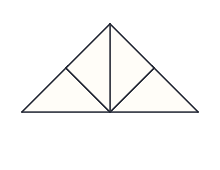
The origami butterfly is a small model with four wings and a locked body, folded from a square using the waterbomb base. It is a comfortable intermediate model that takes about six minutes and introduces collapsing a base.
Jumping Frog
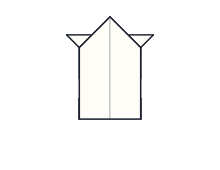
The origami jumping frog is a traditional action model folded from a stiff rectangle that springs forward when you press and release its back. It is an intermediate model that takes about six minutes, mostly for the collapse and the zigzag spring.
Pinwheel
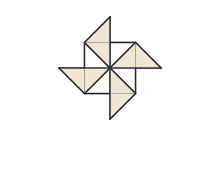
The origami pinwheel is a flat four-bladed model folded from the traditional windmill base that can be pinned to a stick so it spins in the wind. It is an intermediate model taking about six minutes, with one careful step where hidden corners are pulled out.
Paper Boat
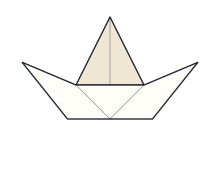
The origami paper boat is a classic folded from a rectangular sheet, passing through a paper hat on the way to a small boat that really floats. It is an easy model that most children and adults finish in about five minutes.